In cryptography, ciphertext or cyphertext is the result of encryption performed on plaintext using an algorithm, called a cipher. Ciphertext is also known as encrypted or encoded information because it contains a form of the original plaintext that is unreadable by a human or computer without the proper cipher to decrypt it. This process prevents the loss of sensitive information via hacking. Decryption, the inverse of encryption, is the process of turning ciphertext into readable plaintext. Ciphertext is not to be confused with codetext, because the latter is a result of a code, not a cipher. == Conceptual underpinnings == Let m {\displaystyle m\!} be the plaintext message that Alice wants to secretly transmit to Bob and let E k {\displaystyle E_{k}\!} be the encryption cipher, where k {\displaystyle _{k}\!} is a cryptographic key. Alice must first transform the plaintext into ciphertext, c {\displaystyle c\!} , in order to securely send the message to Bob, as follows: c = E k ( m ) . {\displaystyle c=E_{k}(m).\!} In a symmetric-key system, Bob knows Alice's encryption key. Once the message is encrypted, Alice can safely transmit it to Bob (assuming no one else knows the key). In order to read Alice's message, Bob must decrypt the ciphertext using E k − 1 {\displaystyle {E_{k}}^{-1}\!} which is known as the decryption cipher, D k : {\displaystyle D_{k}:\!} D k ( c ) = D k ( E k ( m ) ) = m . {\displaystyle D_{k}(c)=D_{k}(E_{k}(m))=m.\!} Alternatively, in a non-symmetric key system, everyone, not just Alice and Bob, knows the encryption key; but the decryption key cannot be inferred from the encryption key. Only Bob knows the decryption key D k , {\displaystyle D_{k},} and decryption proceeds as D k ( c ) = m . {\displaystyle D_{k}(c)=m.} == Types of ciphers == The history of cryptography began thousands of years ago. Cryptography uses a variety of different types of encryption. Earlier algorithms were performed by hand and are substantially different from modern algorithms, which are generally executed by a machine. === Historical ciphers === Historical pen and paper ciphers used in the past are sometimes known as classical ciphers. They include: Substitution cipher: the units of plaintext are replaced with ciphertext (e.g., Caesar cipher and one-time pad) Polyalphabetic substitution cipher: a substitution cipher using multiple substitution alphabets (e.g., Vigenère cipher and Enigma machine) Polygraphic substitution cipher: the unit of substitution is a sequence of two or more letters rather than just one (e.g., Playfair cipher) Transposition cipher: the ciphertext is a permutation of the plaintext (e.g., rail fence cipher) Historical ciphers are not generally used as a standalone encryption technique because they are quite easy to crack. Many of the classical ciphers, with the exception of the one-time pad, can be cracked using brute force. === Modern ciphers === Modern ciphers are more secure than classical ciphers and are designed to withstand a wide range of attacks. An attacker should not be able to find the key used in a modern cipher, even if they know any specifics about the plaintext and its corresponding ciphertext. Modern encryption methods can be divided into the following categories: Private-key cryptography (symmetric key algorithm): one shared key is used for encryption and decryption Public-key cryptography (asymmetric key algorithm): two different keys are used for encryption and decryption In a symmetric key algorithm (e.g., DES, AES), the sender and receiver have a shared key established in advance: the sender uses the shared key to perform encryption; the receiver uses the shared key to perform decryption. Symmetric key algorithms can either be block ciphers or stream ciphers. Block ciphers operate on fixed-length groups of bits, called blocks, with an unvarying transformation. Stream ciphers encrypt plaintext digits one at a time on a continuous stream of data, with the transformation of successive digits varying during the encryption process. In an asymmetric key algorithm (e.g., RSA), there are two different keys: a public key and a private key. The public key is published, thereby allowing any sender to perform encryption. The private key is kept secret by the receiver, thereby allowing only the receiver to correctly perform decryption. == Cryptanalysis == Cryptanalysis (also referred to as codebreaking or cracking the code) is the study of applying various methodologies to obtain the meaning of encrypted information, without having access to the cipher required to correctly decrypt the information. This typically involves gaining an understanding of the system design and determining the cipher. Cryptanalysts can follow one or more attack models to crack a cipher, depending upon what information is available and the type of cipher being analyzed. Ciphertext is generally the most easily obtained part of a cryptosystem and therefore is an important part of cryptanalysis. === Attack models === Ciphertext-only: the cryptanalyst has access only to a collection of ciphertexts or code texts. This is the weakest attack model because the cryptanalyst has limited information. Modern ciphers rarely fail under this attack. Known-plaintext: the attacker has a set of ciphertexts to which they know the corresponding plaintext Chosen-plaintext attack: the attacker can obtain the ciphertexts corresponding to an arbitrary set of plaintexts of their own choosing Batch chosen-plaintext attack: where the cryptanalyst chooses all plaintexts before any of them are encrypted. This is often the meaning of an unqualified use of "chosen-plaintext attack". Adaptive chosen-plaintext attack: where the cryptanalyst makes a series of interactive queries, choosing subsequent plaintexts based on the information from the previous encryptions. Chosen-ciphertext attack: the attacker can obtain the plaintexts corresponding to an arbitrary set of ciphertexts of their own choosing Adaptive chosen-ciphertext attack Indifferent chosen-ciphertext attack Related-key attack: similar to a chosen-plaintext attack, except the attacker can obtain ciphertexts encrypted under two different keys. The keys are unknown, but the relationship between them is known (e.g., two keys that differ in the one bit). == Famous ciphertexts == The Babington Plot ciphers The Shugborough inscription The Zimmermann Telegram The Magic Words are Squeamish Ossifrage The cryptogram in "The Gold-Bug" Beale ciphers Kryptos Zodiac Killer ciphers
Robotics
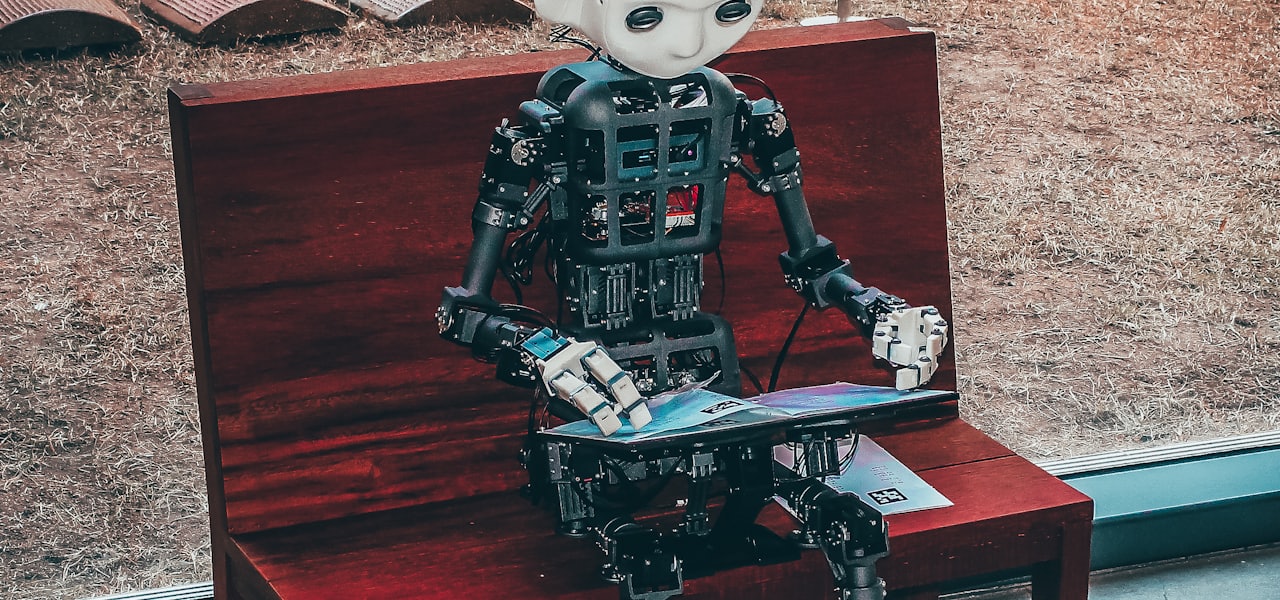
Robotics is the interdisciplinary study and practice of the design, construction, operation, and use of robots. A roboticist is someone who specializes in robotics. Robotics usually combines four aspects of design work: a power source (e.g. a battery), mechanical construction, a control system (electrical circuits), and software (run by remote control or artificial intelligence). The goal of most robotics is to design machines that can assist humans in various fields, such as agriculture, construction, domestic work, food processing, inventory management, manufacturing, medicine, military, mining, space exploration, and transportation. Robots impact humans by displacing workers. Some expect this to occur at an increasing rate, leading to proposed solutions such as basic income. Robotics is itself a lucrative business that creates careers, especially for postgraduates. Roboticists often aim to create machines that seem to interface naturally with humans. The field is under active research and development, with areas of interest including robot kinematics and quantum robotics. == Design == Robotics usually combines four aspects of design work to create a robot: Power source: Potential energy sources include wired electricity, a battery, and/or petrol. Mechanical construction: A physical form or combination of forms is designed to functionally achieve tasks within a given range of environments. This can include locomotive elements such as wheels and caterpillar tracks, as well as hydraulic limbs and manipulators (e.g. hands). Control system: Electrical circuits (utilizing components such as diodes and transistors) are used to run software, govern motor movement, and read sensors. Software: A program is how a robot decides when or how to do something. Robotic programs can be run by remote control, artificial intelligence (AI), or a hybrid of the two. AI programming is an important part of robotic navigation and human–robot interaction. === Power source === Many different types of batteries can be used as a power source. Most are lead–acid batteries, which are safe and have relatively long shelf lives but are rather heavy compared to silver–cadmium batteries, which are much smaller in volume and much more expensive. Designing a battery-powered robot needs to take into account factors such as safety, cycle lifetime, and weight. Generators, often some type of internal combustion engine, can also be used, but are often mechanically complex and inefficient. Additionally, a tether could connect the robot to a power supply, saving weight and space, but requiring a cumbersome cable. Potential power sources include: Flywheel energy storage Hydraulics Nuclear Organic garbage (through anaerobic digestion) Pneumatics (compressed gases) Solar power === Mechanical construction === Actuators are the "muscles" of a robot, the parts which convert stored energy into movement. The most popular actuators are electric motors that rotate a wheel or gear and linear actuators that control factory robots. Most robots use electric motors—often brushed and brushless DC motors in portable robots or AC motors in industrial robots and computer numerical control machines—especially in systems with lighter loads and where the predominant form of motion is rotational. Meanwhile, linear actuators move in and out and often have quicker direction changes, particularly when large forces are needed, such as with industrial robotics. They are typically powered by oil or compressed air, but can also be powered by electricity, usually via a motor and a leadscrew. The mechanical rack and pinion is common. Recent alternatives to DC motors are piezoelectric motors, including ultrasonic motors, in which tiny piezoceramic elements vibrate many thousands of times per second, causing linear or rotary motion. One type uses the vibration of the piezo elements to step the motor in a circle or a straight line; another type uses the piezo elements to vibrate a nut or drive a screw. The advantages of these motors are nanometer resolution, speed, and force for their size. Series elastic actuation (SEA) relies on introducing intentional elasticity between the motor actuator and the load for robust force control. Due to the resultant lower reflected inertia, series elastic actuation improves safety during robot interactions or collisions. Further, it provides energy efficiency and shock absorption (mechanical filtering) while reducing excessive wear on the transmission and other components. This approach has successfully been employed in various robots, particularly advanced manufacturing robots and walking humanoid robots. The controller design of a series elastic actuator is most often performed within the passivity framework as it ensures the safety of interaction with unstructured environments. However, this framework suffers from stringent limitations imposed on the controller, which may impact performance. Pneumatic artificial muscles, also known as air muscles, are special tubes that expand (typically up to 42%) when air is forced inside them; they are used in some robot applications. Muscle wire, also known as shape memory alloy, is a material that contracts (under 5%) when electricity is applied; they have been used for some small robots. Electroactive polymers are a plastic material that can contract substantially (up to 380% activation strain) from electricity and have been used in the facial muscles and arms of humanoid robots, as well as to enable new robots to float, fly, swim or walk. Additionally, elastic carbon nanotubes are a promising experimental artificial muscle technology. The absence of defects in carbon nanotubes enables these filaments to deform elastically by several percent, with energy storage levels of perhaps 10 J/cm3 for metal nanotubes. Human biceps could be replaced with wire of this material measuring 8 millimetres (3⁄8 in) in diameter, feasibly allowing future robots to outperform humans. ==== Locomotion ==== Robots with only one or two wheel(s) can have advantages such as greater efficiency, reduced parts, and navigation through confined areas. A one-wheeled robot balances on a round ball; Carnegie Mellon University's Ballbot is the approximate height and width of a person. Several attempts have also been made to build spherical robots (also known as orb bots or ball bots), which move by spinning a weight inside the ball or rotating outer shells. Two-wheeled balancing robots generally use a gyroscope to detect how much a robot is falling and drive the wheels proportionally up to hundreds of times per second to counterbalance the fall, based on inverted pendulum dynamics. NASA's Robonaut has been mounted to a Segway for a similar effect. Most mobile robots have four wheels or continuous tracks. Six wheels can give better traction in outdoor terrain, while tracks provide even more grip. Tracked wheels are common for outdoor off-road robots, but are difficult to use indoors. A small number of skating robots have been developed, one of which is a multimodal walking and skating device with four legs and unpowered wheels. Several robots have been made that can walk on two legs, but not yet as reliably as a human. Many other robots have been built that walk on more than two legs, being significantly easier. Walking robots could be used for uneven terrains, providing a high degree of mobility and efficiency, but two-legged robots can currently only handle flat floors or perhaps stairs. Some approaches have included: The zero moment point (ZMP) is the algorithm used by robots such as Honda's ASIMO. The robot's onboard computer tries to keep the total inertial forces (the combination of Earth's gravity and the acceleration and deceleration of walking) exactly opposed by the floor reaction force (the force of the floor pushing back on the robot's foot). In this way, the two forces cancel out, leaving no moment (force causing the robot to rotate and fall over). Human observers note that this is not exactly how a human walks, with some describing ASIMO's walk as looking like it needs use the bathroom. ASIMO's walking algorithm utilizes some dynamic balancing, but requires a flat surface. Several robots, built in the 1980s by Marc Raibert at the MIT Leg Laboratory, successfully demonstrated very dynamic walking. Initially, a robot with only one leg, and a very small foot could stay upright simply by hopping. The movement is the same as that of a person on a pogo stick. As the robot falls to one side, it would jump slightly in that direction to catch itself. Soon, the algorithm was generalized to two and four legs. A bipedal robot was demonstrated running and even performing somersaults. A quadruped was also demonstrated which could trot, run, pace, and bound. A more advanced approach is a dynamic balancing algorithm, which constantly monitors the robot's motion and places the feet to maintain stability. This technique has been demonstrated by Anybots' Dexter robot (
Noam Shazeer
Noam Shazeer (born 1975 or 1976) is an American computer scientist and entrepreneur known for his contributions to the field of artificial intelligence and deep learning, particularly in the development of transformer models and natural language processing. He lives in Palo Alto, California. == Career == Noam Shazeer joined Google in 2000. One of his first major achievements was improving the spelling corrector of Google's search engine. In 2017, Shazeer was one of the lead authors of the seminal paper "Attention Is All You Need", which introduced the transformer architecture. At Google, Shazeer and his colleague Daniel de Freitas built a chatbot named Meena. Following the refusal of Google to release the chatbot to the public, Shazeer and Freitas left the company in 2021 to found Character.AI. In September 2023, Time Magazine chose Shazeer as one of the 100 most influential people in the AI world. In August 2024, it was reported that Shazeer would be returning to Google to co-lead the Gemini AI project. Shazeer was appointed as technical lead on Gemini, along with Jeff Dean and Oriol Vinyals. It was part of a $2.7 billion deal for Google to license Character's technology. Since he owns 30-40% of the company, it is estimated he netted $750 million-$1 billion. In 2026, he was elected a member of the National Academy of Engineering. == Views == Shazeer said about artificial general intelligence that he doesn't "particularly care about AGI in the sense of wanting something that can do absolutely everything a person can do”. When asked in 2023 if he is afraid that AGI will destroy the world, he said: "No. Not yet. [...] We’re going to work on it as the technology improves". When asked why do large language models work he answered: "My best guess is divine benevolence [...] Nobody really understands what’s going on. This is a very experimental science [...] It’s more like alchemy or whatever chemistry was in the Middle Ages.” Shazeer has stated, "I do not believe that humans have an attribute called gender... I do not believe that G-d puts people in the wrong bodies. I do not believe that it is okay to sterilize children." == Personal life == Shazeer is an orthodox Jew. His grandparents escaped the Holocaust into the Soviet Union and later lived some time in Israel before emigrating to the USA. His father, Dov Shazeer, was a math teacher who became an engineer and his mother was a homemaker. His sister was ordained as a rabbi by Hebrew College. Shazeer was born in Philadelphia, attended grade school at Cohen Hillel Academy in Marblehead, Massachusetts, and attended Swampscott High School in Swampscott, Massachusetts. He won a gold medal with perfect score at International Mathematical Olympiad 1994 as a member of the USA team. He went on to study math and computer science at Duke University in Durham, North Carolina from 1994 to 1998. At Duke he was a recipient of the Angier B. Duke Memorial Scholarship, and, as part of the Duke math team, won prizes in several math tournaments. He started studying in a graduate program in Berkeley but did not finish it. He is a father of three and is married to Yael Shacham Shazeer
Cristóbal Valenzuela
Cristóbal Valenzuela (born 1989) is a Chilean-born technologist, software developer, and CEO of Runway. In 2018, Valenzuela co-founded the AI research company Runway in New York City with Anastasis Germanidis and Alejandro Matamala. == Education == Valenzuela graduated from Adolfo Ibáñez University (AIU), a research private university in Chile. From there, Valenzuela obtained a bachelor's degree in economics and business management, along with a master's degree in arts in design in 2012. In 2018, he graduated with a media arts degree from ITP NYU's Tisch School of the Arts. == Career and recognition == One of Valenzuela's first jobs was as a teaching and research assistant at the Adolfo Ibáñez University School of Design, and later an adjunct professor in the same department. In 2018, he became a researcher at NYU's Tisch School of the Arts ITP program, where he worked with Daniel Shiffman. He contributes to open-source software projects, including ml5.js, an open-source machine learning software. He co-founded Runway with two colleagues from ITP, Anastasis Germanidis, and Alejandro Matamala. The goal of Runway is to create new tools for human imagination using generative AI. In recent years, Valenzuela's work has been sponsored by Google and the Processing Foundation and his projects have been exhibited throughout Latin America and the US, including the Santiago Museum of Contemporary Art, Lollapalooza, NYC Media Lab, New Latin Wave, Inter-American Development Bank, Stanford University and New York University. In September 2023, Valenzuela was named as one of the TIME 100 Most Influential People in AI (TIME100 AI).
Composite Capability/Preference Profiles
Composite Capability/Preference Profiles (CC/PP) is a specification for defining capabilities and preferences of user agents (also known as "delivery context"). The delivery context can be used to guide the process of tailoring content for a user agent. CC/PP is a vocabulary extension of the Resource Description Framework (RDF). The CC/PP specification is maintained by the W3C's Ubiquitous Web Applications Working Group (UWAWG) Working Group. == History == Composite Capability/Preference Profiles (CC/PP): Structure and Vocabularies 1.0 became a W3C recommendation on 15 January 2004. A "Last-Call Working-Draft" of CC/PP 2.0 was issued in April 2007
Oracle Cloud Platform
Oracle Cloud Platform refers to a Platform as a Service (PaaS) offerings by Oracle Corporation as part of Oracle Cloud Infrastructure. These offerings are used to build, deploy, integrate and extend applications in the cloud. The offerings support a variety of programming languages, databases, tools and frameworks including Oracle-specific, open source and third-party software and systems. == Deployment models == Oracle Cloud Platform offers public, private and hybrid cloud deployment models. == Architecture == Oracle Cloud Platform provides both Infrastructure as a Service (IaaS) and Platform as a Service (PaaS). The infrastructure is offered through a global network of Oracle managed data centers. Oracle deploys their cloud in Regions. Inside each Region are at least three fault-independent Availability Domains. Each of these Availability Domains contains an independent data center with power, thermal and network isolation. Oracle Cloud is generally available in North America, EMEA, APAC and Japan with announced South America and US Govt. regions coming soon.
Political Declaration on Responsible Military Use of Artificial Intelligence and Autonomy
The Political Declaration on Responsible Military Use of Artificial Intelligence and Autonomy is an international norms and arms control proposal by the U.S. government for artificial intelligence in the military. It was announced at the Summit on Responsible Artificial Intelligence in the Military Domain by Bonnie Jenkins, Under Secretary of State for Arms Control. As of January 2024, fifty-one countries have signed the declaration. The US government sees it as an extension of the Department of Defense Directive 3000.09 which is the current US policy on autonomous weapons. It covers areas such as Lethal autonomous weapons and weapons decision-making.